
Q2 of this year’s S(ingapore)MO Senior Round 2 was my proposal (so is Q3 but that one isn’t very interesting), and I just wanted to share a little about the problem development process.


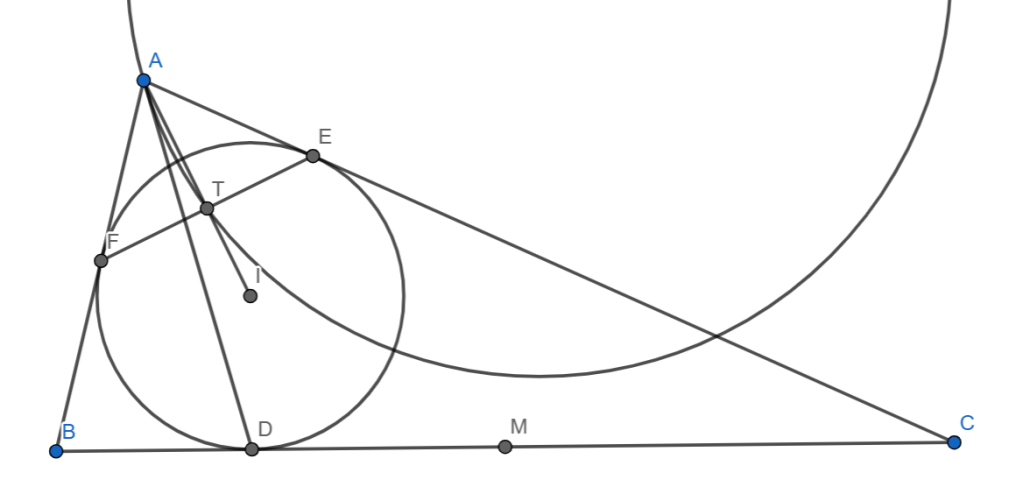
First let me talk about how to draw an accurate diagram. If we let 


- The perpendicular from
to
and
- The perpendicular bisector of
.
Anyways. One day I was looking at a geom solution that involves radius zero circles, and I thought it would be fun to try and construct a problem with the idea.1 For those who are unfamiliar with the technique, you can read this handout.
So what I wanted was a midpoint on a nice collinearity. Why?
If say 


With that in mind, I started scrolling through this handout until I saw this config:
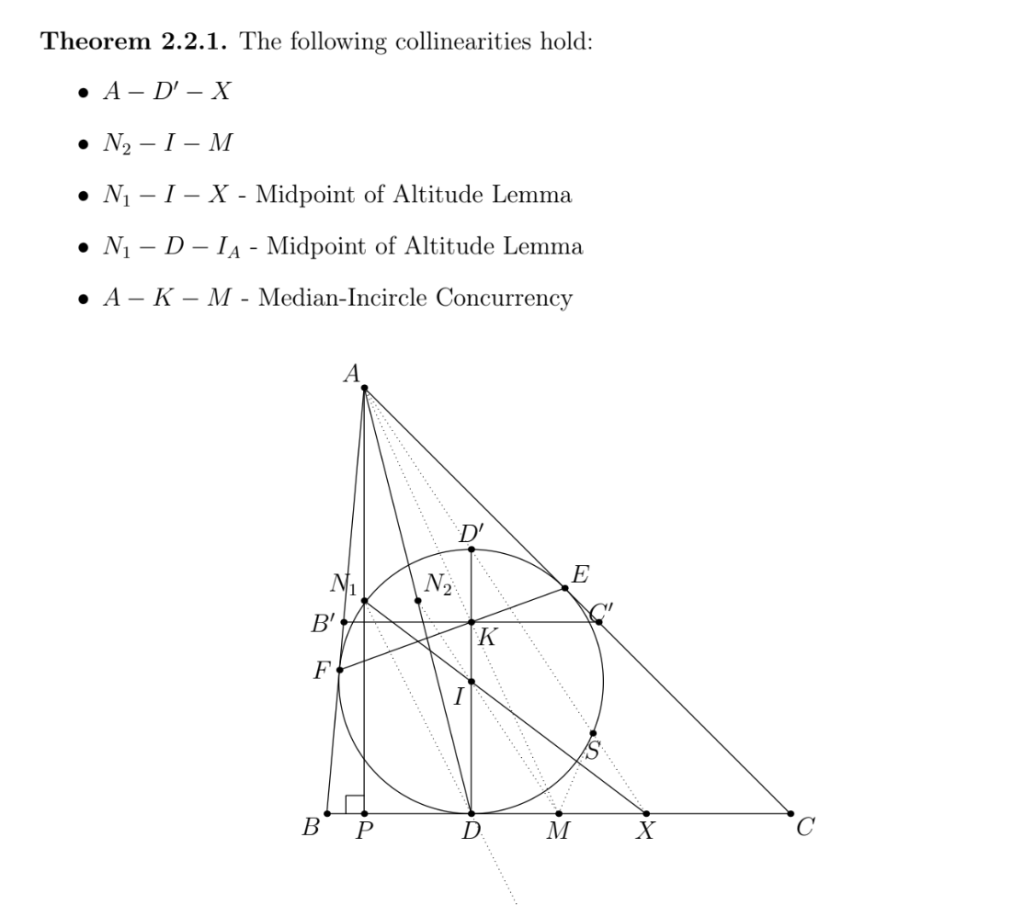
In particular, the line 

As discussed above, there exists a circle tangent to 

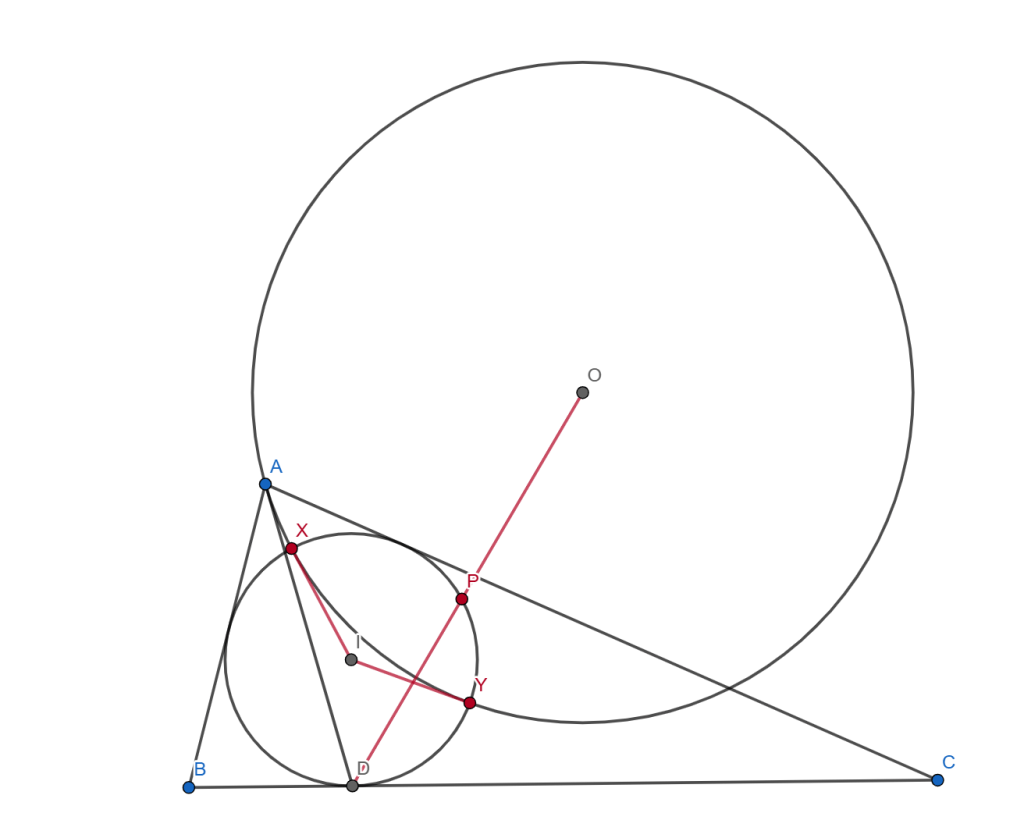
Since 


This means the two circles are orthogonal. Hence, if I marked the point 


But we know many properties of 
If we look at this classic problem, we are motivated to construct the circle through 
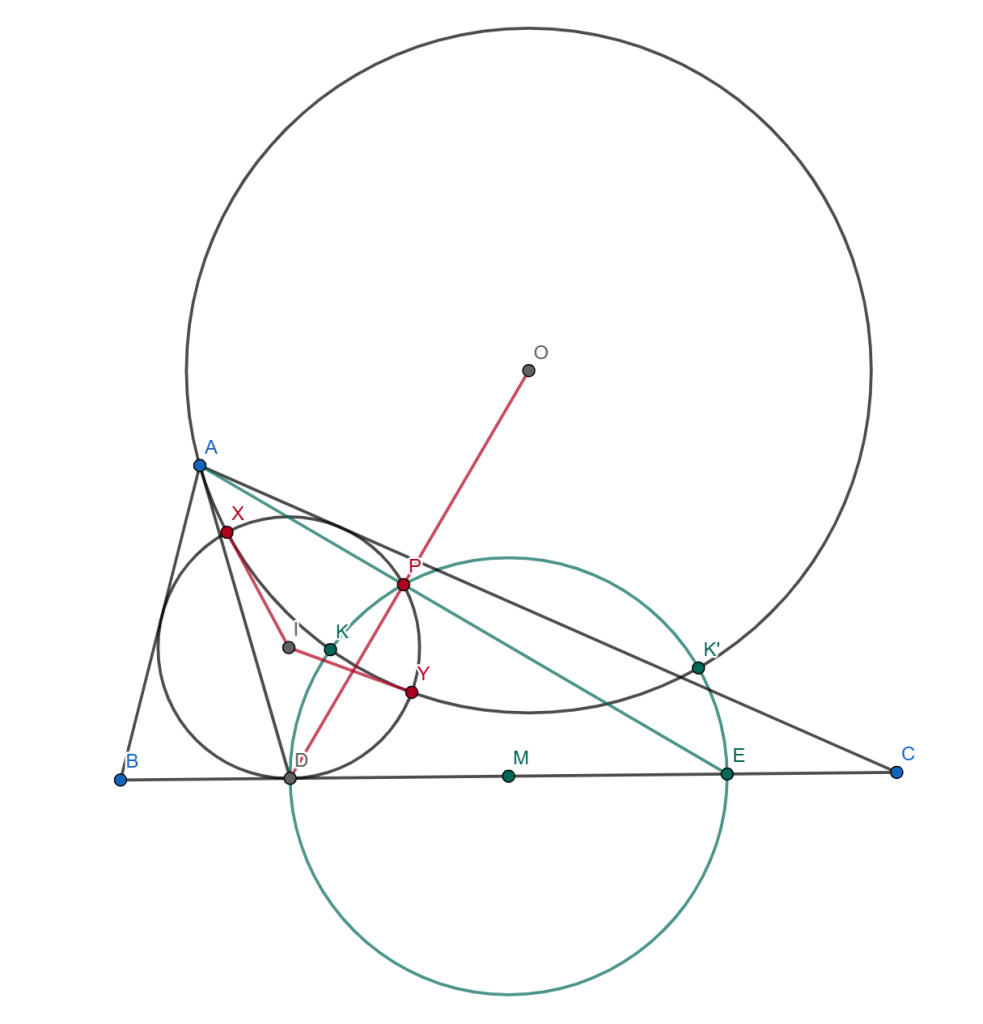
At this point, I had three mutually orthogonal circles. This gave me new ways to define 

I knew there was a proposal somewhere in this diagram already, and I just had to find what i wanted to ask. There were a lot of possible questions, and I tried to find the one that defines the least number of points.
I forgot exactly what I tried here, but I eventually ended up with the following which I was satisfied with:
Let 


While lying in bed, I realised that I could combine all the tangencies into one condition and ask to prove
I passed this question to a bunch of other X-men to testsolve, and the consensus is that it was roughly a easy Q2 level question.
So I submitted it, and to my surprise it really ended up as a Q2.
- If we go back one step further, the reason why I was thinking about constructing geom problems at all is because of the quality of geom problems at SMO last year. ↩︎
 Gabriel Goh Hao Xiang
Leave a comment